Sunday, April 21, 2013

Square Style! (Piet Mondrian)

Piet Mondrian started out doing paintings that were "representational" which means the painting looks like something in the real world. But over time he started to paint in a different way called "abstraction" which means something doesn't need to look like something the real world. 

Lots of times artists start out painting one way, and over time they start painting different ways. Sometimes they do it because they like trying new things. For Mondrian he had a way of thinking about art where he believed paintings didn't need to look like things in the real world. The way he painted changed to match what he was thinking.

These 2 paintings show how Mondrian started painting. They are of a farm, and a sunflower. When you look at them, you can tell what they are.
 
Small farm on Nistelrode, 1904

A painting of a sunflower - 1907

This painting of a a mill starts to show how Mondrian was starting to make his paintings not look like things in real life. 
The Red Mill - 1910

And this one shows how he started using the squares, lines, and only a couple colors in one painting.  
 Composition in Color A
Composition in Color A - 1917

Later, Mondrian's style turned into using black lines and the colors red, yellow, and blue. They don't look like anything in real life, but they are still neat to look at. You could even make up a story about them if you wanted to.
 Composition with red, blue, and yellow-1930

Composition 2-1922

Composition C - Number 3-with red, yellow, and blue-1935

Composition A -1923


 Broadway Boogie Woogie-1943

 
BIOGRAPHY

Piet Mondrian
Born: 07 March 1872; Amersfoort, Netherlands
Died: 01 February 1944; New York, United States
Nationality: Dutch


Self Portrait (1900) and a picture of what Piet Mondrian looked like
  • His style was precise, using geometric shapes in mostly the primary colors of yellow, blue, and red   
  • It was a style that Mondrian called "neoplasticism" ("nieuwe beelding" in Dutch).
  • Mondrian's paintings did not sell very well during his lifetime. 
  • Mondrian had his first one-man show when he was 70 years at the Valentin Dudensing Gallery in New York City 
  • 1892 - 1897 - Mondrian studied art at the Rijksakademie van Beeldende Kunsten (Amsterdam Academy of Fine Arts) where he painted mostly landscapes
  • 1912 - He moved to Paris, France, but during World War 1, he moved back to the Netherlands.
  • 1917 - Mondrian and Theo van Doesburg started a very influential art magazine called "De Stijl," which means "The Style." 
  • 1919 - Mondrian returned to Paris. And he stayed until 1938. 
  • 1938 - He moved to London, England, where he painted for 2 years. 
  • 1940 - He moved to New York, USA, where he spent the final four years of his life. 
  • Mondrian moved to a new studio where he would BIG pieces of paper up on the wall that he'd move around different ways. After he passed away, his friends Harry Holtzman, and Fritz Glarner took pictures and made videos (film at this time) so they could recreate how they were hung up so they could share it with other people at art exhibits all over the world.
ACTIVTIES
Paint a Mondrian Online or Print Coloring Pages

Mondrian Activity Page (probably geared a little more towards 4-6)

Tracing squares and then coloring in with red, blue, and yellow

For the younger set an activity:
  • Cut strips of black construction paper to make the "lines" (short, long, medium)
  • Cut squares of colored paper (big, small, etc)
  • Lay the black strips of paper down to make a grid
  • Add colored squares of paper to the grid
  • Move them around and see what you come up with! :)

Monday, April 1, 2013

Land Ho! - Outdoor Art from Nature

LAND ART is type of art created in nature, using natural materials like soil, rocks, branches or leaves, and even water. Sometimes they're made to stay around for long time, but sometimes they are made in snow or sand so the don't last as long.

Something that has stayed around a long time are the "Nazca Lines" of Peru. They are giant pictures carved into the ground made a very long time ago (500 BC). They show different animals and people, but no one knows exactly why people made them. One idea is that the carvings were a giant calendar that used the stars to mark time.

Some of these can only be seen from an airplane they are so big. They can be almost 6 miles (9.6 km) wide.
 Nazca Line - Spider
Nazca Line - Monkey

A well known artist named Robert Smithson started making big sculptures out of rocks and other things in nature. He made "Spiral Jetty" in 1970.
It is 1,500 feet (450 m) long, and 6,500 TONs of rocks and earth!
It is in Great Salt Lake in Utah.


Artists can do a lot of different things with what they find in nature. Patterns in the sand or snow, rocks, leaves, flowers, pine cones can all be used to make art.

Tony Plant is an artist from England who walks on the beach with a gardening rake to make beautiful designs in the sand. They only last a couple hours because the tide comes in and washes them away.
This is how Mr. Plant makes his art by walking with a rake to make the designs.

Simon Beck is another artist from England, but he makes designs in the snow in the mountains of France. He maps out the design on the computer. He also uses different markers around him like trees so he knows where to walk in the snow to make the pattern. It can take him between 6 HOURS and 2 DAYS to make one design.  
Detail of the pattern in the snow
Mr. Beck standing near one of his creations.

Michael Grab is an artist who takes rocks and balances them. It almost doesn't look real, but the way they are stacked is what is holding them up. 
This a picture of the artist stacking up rocks to look like a ball on top of another rock. It takes a lot of time to figure out how to place the rocks, but the artist said he really likes it because it makes him think.
  
Kathy Klein makes patterns called "mandalas" out of different materials she finds in nature. "Mandala" means "circle". She uses flower petals, vegetables, and pine cones to to make the patterns.
This is a "geoglyph" which means it is a picture made out of the earth. This is an eagle made by Andrew Rogers in You Yangs National Park in Victoria, Australia in 2006. It is 328 feet wide (100 meters),  and 1,500 tons of rock!

Richard Shilling is a land art artist who has a great interview on the blog "The Artful Parent" in a 2010 interview. He gives suggestions on how to get kids into making things from the environment around them.
Richard Shilling - Land Art for Kids
(book is out of print, but used copies appear to be available)
There are so many wonderful ways to express yourself with materials right outside your front door.There is no wrong way to do it or any age limit, young or old.

Wednesday, March 20, 2013

To the Moon and Back

 In real life a full moon can look like this:

 And the moon can look different as it changes:

In art the moon can look a lot of different ways. Part of art is "interpretation", which means people can see things many different ways. No one way is right or wrong. It's just different. And you may find you like some "interpretations" more than others. And that is just fine. 

The moon is hiding behind the clouds, but also looks kind of like the glow of the streetlamp. 
 
New York With Moon - Georgia O'Keeffe

In this painting the moon helps frame the flowers.
Autumn Flowers in Front of Full Moon - Hiroshige

The moon is high up in the sky, and the bunnies are looking up to see it.
Rabbits Under Moon - Hiroshige

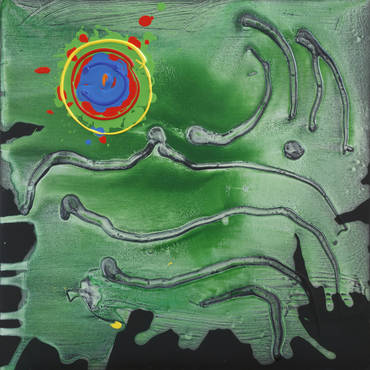
These paintings are interpretations of the moon. They don't look like the real life moon, but they have a round circle which the artist uses as the moon. This is called abstract, which means something doesn't have to look like it does in real life. But if you look at it, you may get a feeling of what it is even if it doesn't look like the real life thing.
Green Sea Moon - John Hoyland (2006)

Blue Moon - John Hoyland (2006)

 Vincent's Moon - John Hoyland (2007)

Moon's Milk - John Hoyland (2009)

These paintings are abstract as well. Can you see where the artist put the moon?
 Fire Full Moon - Paul Klee (1933)

 
Full Moon - Paul Klee (1919)

Even though we can't see the faces of the boy and girl, you know they are looking at the moon. 
Do you think they're smiling? Do you think they're talking? What would they talk about?
Boy and Girl Gazing at the Moon - Norman Rockwell (1926)

These paintings have big full moons in the sky above nature scenes. 
They are dark colors which can make people think of night time.
Grasshopper and Fool Moon - Ohara Koson (1910)

 
Cherry on a Moonlit Night - Ohara Koson (1932)

These paintings are dark as well and there are a lot of shadows. The moon is very bright. It might almost look like the sun if the rest of the painting wasn't dark to make you think of night time.
Moonlight Study at Millbank - William Turner (1797)

Fishermen at Sea - William Turner (1796)


Friday, March 8, 2013

Dog Gone It! (Man's Best Friend in Art)

Dogs are called "mans best friend" and often times in paintings, they can be a symbol for friendship. They can also mean guidance, protection, loyalty, or faithfulness. 

Dogs have been around a long time. Even hundreds of years ago humans and dogs were buddies.
This is a painting done on a cave a very long time ago
showing a hunter and his dog.


In other pieces of art done a long time ago, dogs are shown to.
Like in mosaics (pictures made up of tiny pieces, like a puzzle)
and stone carving.
Dog Mosaic at the Olearie Exhibit – Rome, Italy

Cave Canem – Mosaic dog – Pompeii, Italy
 
Assyrian carving


And since dogs are called "mans best friend", they are often
shown with people as their friends.
A Girl - David Burliuk
 
 A Ride Through Water
 
Dog 3-Briton Riviere
 
Tahitian Pastorale - Paul Gaugin (1898)

Sara With Her Dog - Mary Cassatt
 
Costume Design - Woman Dressed in Black With Furs, Hat,
 and Dog On A Lead -Erte
 
The Watermelon - Grace Hudson

Boy With A Dog - Pablo Picasso (1905)


And sometimes a dog's buddy doesn't have to be a person.
Doubtful Crumbs - Edwin Henry Landseer (1858)

At The Stables - Edgar Degas
 
Sometimes dogs will get their very own pictures painted.
A Sleeping Dog With Terracotta-Pot - Gerrit Dou (1650)

Head Of A Dog - Edouard Manet (1876)
 
Loup-Garou -  George Rodrigue (1991)

Study Of A Dog - Jean Leon Gerome

And sometimes pictures of dogs might seem a little weird or different. But there are many different ways to show things in art.
Dog Barking At the Moon - Joan Miro (Joan=Juan)
Portrait Of Maurice - Andy Warhol (1976)

This painting is called "His Master's Voice" and shows a
dog listening to his owner's voice on an old record player.
 
This painting call  "Their Master's Voice" by Michael Sowa shows A LOT of dogs listening to an old record player.

Little Dog's Rock - Jacek Yerka
Do you see the dog in the rocks?

And it's not just pictures. Puppies and dogs can be made into sculpture to.
Puppy" by Jeff Koons is 43 feet high and made of flowers!
 
Balloon Dog is 10 feet high!
He is made of stainless steel.

(Note to parents: If you Google Jeff Koons, be aware he has some racy pieces that may come up. It's not all puppies and kittens.)